Prosthetic Costs and Funding in Australia: NDIS, QALS and DVA
By Maegan Morrison, AOPA Certified prosthetist and orthotistUpdated

The cost of a prosthetic limb depends on the socket, components, fitting and ongoing care you need. An itemised quote is more useful than a single headline price: it shows what is included and what may need funding later.
In Australia, possible funding pathways include the NDIS, Queensland Artificial Limb Service (QALS), DVA and injury-related schemes such as WorkCover or NIISQ. Your age, residence, disability and injury circumstances affect eligibility.
Being eligible for a scheme does not mean every device or service is automatically approved. This guide explains what to ask about costs, how the pathways differ and what to confirm before work starts.
How Much Does a Prosthetic Leg Cost in Australia?
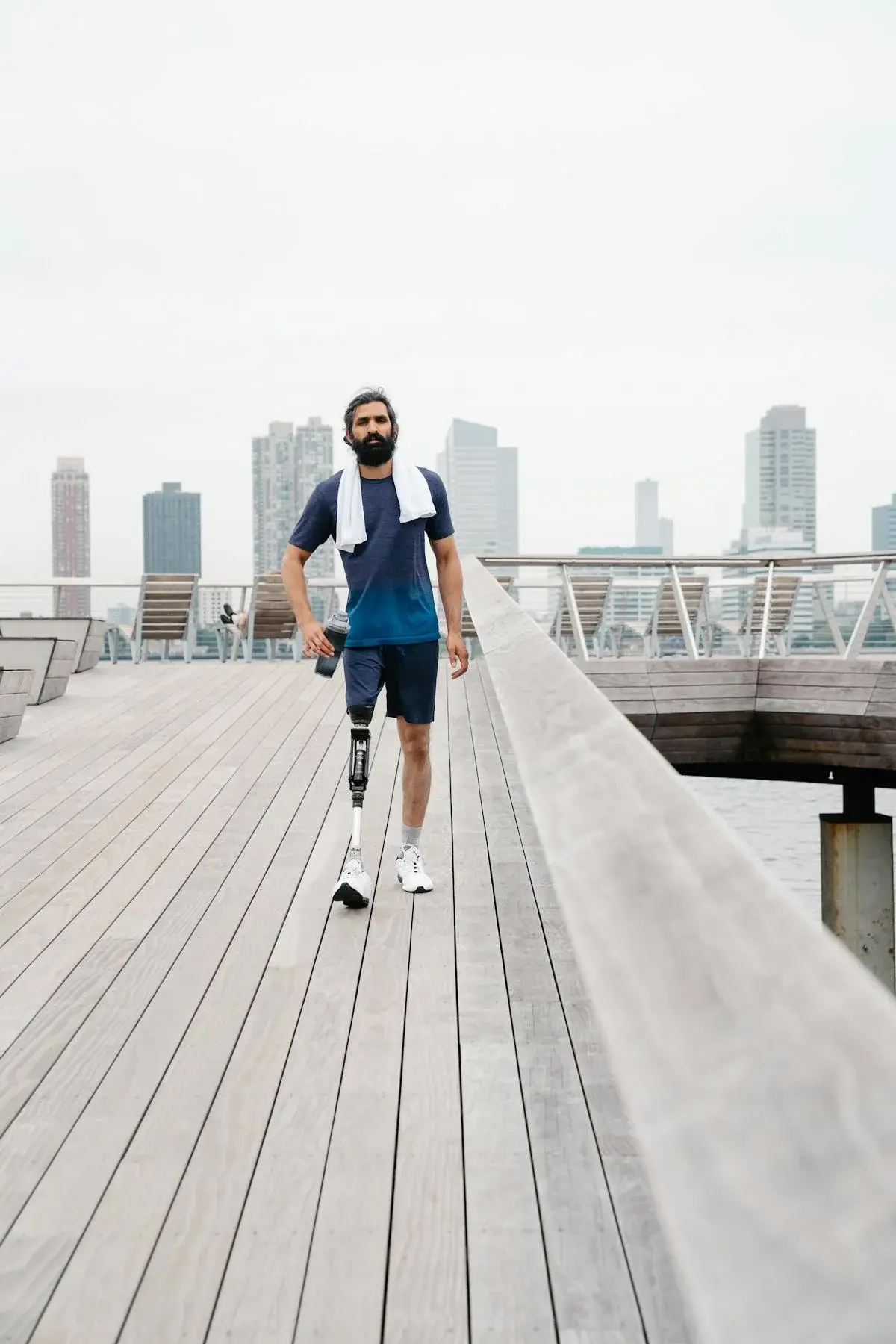
There is no single price that describes every prosthetic leg. A below-knee prosthesis and an above-knee prosthesis use different components. Your prosthetist needs to assess your limb, activities and goals before recommending a system and preparing a quote.
| Part of the quote | Question to ask |
|---|---|
| Socket and fitting | Does the quote cover assessment, socket manufacture, fitting and adjustment appointments? |
| Liner and suspension | Which liner or other suspension system is included, and how will replacements be handled? |
| Foot and knee components | Which foot is proposed? For an above-knee prosthesis, which knee is proposed, and why does it suit my needs? |
| Follow-up | Which review visits and adjustments are included, and which are charged separately? |
| Repairs and ongoing supplies | How are repairs, servicing, socks and replacement liners quoted and approved? |
Ask for the quoted total, the amount approved by the funder and any amount you would pay yourself. Confirm approval before ordering or manufacture. NDIS funding must meet its support criteria; QALS provides standard prosthetic services within its rules and funding limits. Neither should be treated as blanket approval for every component.
Check the NDIS assistive technology criteria and QALS service and eligibility information. Our funding page explains how to start a discussion with Align.
The Age Factor: Understanding When It Applies
One of the most misunderstood aspects of prosthetic funding is the role age plays — specifically, age 65.
The NDIS requires you to be under 65 when you apply. Existing participants can generally choose to remain in the scheme after turning 65. Moving into residential aged care can affect participation; check your circumstances with the NDIS rather than assuming coverage continues for life.
Check the current NDIS eligibility requirements and its residential aged care guidance.
Under 65 When Applying: The NDIS Pathway
You must be under 65 when you apply for the NDIS, and meet its residence and disability or early intervention requirements. Limb loss does not automatically establish eligibility.¹ Australian citizens, permanent residents and Protected Special Category Visa holders may meet the residence requirements.²
What NDIS Actually Funds:
- •Prosthetic limbs (including componentry)
- •Socket replacement when assessed as necessary and approved
- •Repairs and maintenance
- •Consumables like liners and stump socks
- •Allied health services including prosthetist consultations
The NDIS assesses funding based on "reasonable and necessary" supports needed to meet your goals — not just basic mobility.⁴
Important Timing:
You need an approved NDIS plan before your prosthetist can submit quotes. Start your access request as soon as possible after amputation — the planning process takes time, and you'll want funding ready when you transition from your interim to definitive prosthetic.
Often, a team of social workers or occupational therapists will help you get your access request started whilst you're still in hospital recovering from your amputation.
Check your circumstances: Turning 65 does not, by itself, move an existing NDIS participant to QALS. Ask the NDIS about any change to your living arrangements or eligibility.
65 or Over at Time of Amputation: State Artificial Limb Services
If you're 65 or over at the time of your amputation — and you weren't previously an NDIS participant for other disabilities — your prosthesis will most likely be funded by your state's artificial limb service.
In Queensland, that's QALS (Queensland Artificial Limb Service), part of the Medical Aids Subsidy Scheme (MASS).⁶ NSW has EnableNSW, Victoria has VALP, and each state runs its own programme with different rules.⁷
QALS Coverage:
- •One standard prosthetic limb per amputation
- •Replacement cycle of approximately 3 years⁸
- •Consumables like stump socks and gel liners annually
- •Repairs to registered prostheses⁹
QALS Limitations:
QALS provides prosthetics for "basic day-to-day mobility" — not high-tech components.
- •Myoelectric or microprocessor limbs aren't funded
- •Annual funding limits apply
- •Replacements within 3 years require clinical justification
QALS eligibility requires: Queensland residency, valid Medicare card, and completion of your interim rehabilitation programme.
Veterans: DVA Funding Takes Priority
If you've served in the Australian Defence Force, DVA funding supersedes both NDIS and state schemes — but only if you hold the right card.
Gold Card: Comprehensive Coverage
Gold Card holders receive full healthcare coverage for all conditions, whether service-related or not.¹⁰
Gold Card Benefits:
- •Full prosthetic limb coverage
- •All aids and appliances
- •Complete medical treatment without out-of-pocket costs
- •Advanced componentry where clinically justified
- •Lifetime support with no age cutoff
Eligibility requirements include: 60+ permanent impairment points under MRCA legislation, or meeting age/service criteria (veterans aged 70+ with qualifying service, former prisoners of war, etc.).¹¹
White Card: Condition-Specific Coverage
White Cards cover treatment only for accepted service-related conditions, plus mental health support for all veterans with continuous full-time service.¹²
White Card Limitation:
If your amputation stems from a service-related injury accepted by DVA, your prosthetic care is covered. Amputations from non-service causes aren't funded through the White Card — you'd fall back to NDIS (if you joined before 65) or state schemes (if you're 65+ and weren't previously on NDIS).
Important: If you believe there's any connection between your service and the condition that led to amputation, lodge a claim with DVA. Vascular disease, diabetes, and other conditions can be service-related even if diagnosed years after discharge.
When Accidents Happen: WorkCover and NIISQ
Workplace injuries and motor vehicle accidents trigger different funding pathways that often override standard schemes. These compensable injury programmes typically provide more comprehensive coverage than NDIS or state services.
WorkCover: Workplace Injury Compensation
Lost a limb due to a workplace injury? WorkCover Queensland provides no-fault accident insurance covering all injury-related medical costs, including prosthetics.¹³ Your employer's WorkCover policy pays for prosthetic assessment, fitting, components, repairs, and consumables.
WorkCover Advantages:
- •Covers treatments deemed "reasonable and medically necessary"
- •No funding caps that limit state schemes
- •Your prosthetist bills WorkCover directly
Requirements:
- •Claims must be lodged within six months of injury¹⁴
- •Higher-cost componentry may require pre-approval
NIISQ: Motor Vehicle Accidents in Queensland
The National Injury Insurance Scheme Queensland funds lifetime treatment and support for catastrophic injuries from motor vehicle accidents occurring in Queensland on or after 1 July 2016.¹⁵
Unlike other schemes, NIISQ is truly no-fault — eligibility doesn't depend on who caused the accident.
NIISQ Benefits:
- •Comprehensive prosthetic funding
- •Initial fitting, replacements, repairs, and maintenance
- •No age restrictions
- •Lifetime participation for accepted participants
NIISQ Timeline:
- •Applications should be lodged within 12 months of injury¹⁶
- •Interim support for up to two years
- •Eligibility review determines lifetime participation
Other states run equivalent schemes: Victoria has the Transport Accident Commission (TAC), NSW has the Lifetime Care and Support Scheme. Eligibility depends on where your accident occurred.
Claim going to court? If a workplace or motor vehicle injury claim involves legal proceedings, your solicitor can instruct an independent prosthetic and orthotic report with lifetime cost projections.
When Multiple Pathways Apply
Some situations activate multiple funding sources — and knowing which takes priority matters. A 60-year-old veteran injured in a workplace accident might be eligible for NDIS, DVA, and WorkCover simultaneously.
The Typical Hierarchy:
- 1.Compensable injury schemes first (WorkCover, NIISQ) — when an identifiable responsible party exists
- 2.DVA second — trumps general schemes for veterans
- 3.NDIS or state schemes last — the fallback option
Exception: WorkCover takes precedence over DVA if a service-related condition worsened due to workplace activity. Your prosthetist will coordinate with the appropriate funder, but you need to disclose all potential funding sources upfront — failing to do so can delay treatment or create reimbursement issues.
Private Health Insurance: Limited But Worth Checking
Private health insurance rarely covers external prosthetic limbs. The Prostheses List — which mandates insurer benefits — only includes surgically implanted devices like hip replacements and pacemakers, not external artificial limbs.¹⁸
Still, check your policy. Some funds offer partial reimbursement through extras cover, particularly for orthotic components or specific prosthetic accessories.
Medicare doesn't directly cover prosthetic devices either, though orthotic and prosthetic services have received recommendations for inclusion in the Medicare Benefits Schedule.¹⁹ For now, government-funded schemes remain the primary coverage mechanism.
Your Funding Pathway: A Decision Framework
Military service?
Check DVA eligibility first. Gold Card holders are covered regardless of age or cause.
Workplace injury?
Lodge a WorkCover claim immediately. This takes priority over other schemes.
Motor vehicle accident in Queensland?
Apply for NIISQ within 12 months. Other states have equivalent transport accident schemes.
Under 65 when applying, with a non-compensable disability?
NDIS is your pathway. Start your access request as soon as possible post-amputation.
65+ at time of amputation, not already on NDIS?
State artificial limb service (QALS in Queensland). Register with proof of residency and Medicare card.
The pathway seems straightforward once you know the rules. But here's what trips people up: eligibility requirements change, application processes differ between schemes, and timing matters enormously. Apply too late and you miss funding windows or face gaps in coverage.
How Align Prosthetics Simplifies the Process
At Align Prosthetics, Maegan works with NDIS participants (self-managed and plan-managed), DVA, WorkCover, private health and self-funded clients.
Each funder has its own documentation standards and approval process. We help you work out which pathway is relevant and prepare the quotes and reports it needs.
During your initial consultation, we'll:
- Identify your correct funding pathway
- Assist with applications
- Provide the clinical documentation required for approval
- Coordinate directly with your funding agency
For NDIS participants, we'll help quantify the funding needed in your plan before your planning meeting. For DVA Gold and White Card holders, we'll submit requests through the appropriate channels.
Most importantly, we'll tell you upfront what's covered and what isn't. If your scheme won't fund specific componentry you need, we'll explain your options — whether that's clinical justification for exceptions, private top-up payments, or alternative components that meet both your needs and scheme criteria.
The Bottom Line
Australia's prosthetic funding mechanisms exist for good reason — different situations require different support levels. The system works when you know which door to knock on.
About the author
Maegan Morrison
Maegan is an AOPA Certified prosthetist and orthotist on the Sunshine Coast. She runs Align Prosthetics and sees every client herself, at home or at the Birtinya clinic.
About MaeganTalk to Maegan about funding
Call with your situation and Maegan will help you work out which pathway fits and what paperwork comes first.
Open 7 days, 9am to 7pm. Home visits across the Sunshine Coast or our Birtinya clinic.
Medical Disclaimer: This article provides general information about prosthetic funding pathways in Australia and should not be considered financial, legal, or medical advice. Eligibility criteria, coverage details, and application processes may change. Individual circumstances vary significantly, and funding decisions are made by the relevant government agencies or insurers. Always consult with qualified prosthetists, funding agency representatives, and healthcare professionals about your specific situation.
Frequently Asked Questions
How much does a prosthetic leg cost in Australia?▼
There is no single price for every prosthetic leg. The socket, liner or suspension system, foot and any knee component, fitting and follow-up affect the quote. Ask for an itemised quote, the amount approved by your funder and any out-of-pocket amount before manufacture starts.
What happens if my NDIS plan doesn't include enough funding for my prosthetic?▼
Before your NDIS planning meeting, get a quote from your prosthetist detailing expected costs over 12 months — including the prosthetic device, consumables, and follow-up appointments. Present this to your LAC with clear goals showing why you need this level of support. If your approved plan falls short, you can request a plan review or appeal the decision. We regularly assist participants with review requests, providing clinical justification for additional funding.
Can I use QALS funding if I'm under 65 but not eligible for NDIS?▼
No. QALS specifically serves Queenslanders aged 65 and over (or those who previously received funding through state schemes before NDIS rolled out). If you're under 65 and ineligible for NDIS, explore whether compensable injury schemes apply (WorkCover, NIISQ) or if you qualify under DVA pathways. In rare cases where no scheme applies, the public health system provides interim prosthetics, and you may need to fund ongoing care privately or re-apply for NDIS if your circumstances change.
Do I stay on NDIS once I turn 65?▼
Existing NDIS participants can generally choose to remain after turning 65. You must be under 65 when you first apply. Moving into residential aged care can affect participation, so confirm your circumstances with the NDIS. Turning 65 alone does not automatically move you to QALS.
Will DVA cover my prosthetic if my amputation wasn't service-related?▼
White Card coverage extends only to accepted service-related conditions. If DVA hasn't accepted your amputation as service-related, the White Card won't cover your prosthetic. However, Gold Card holders receive full coverage regardless of cause. If you believe there's any connection between your service and your condition, lodge a claim with DVA — vascular disease, diabetes, and other conditions can be service-related even if diagnosed years after discharge.
How long does NIISQ funding approval typically take?▼
Initial eligibility assessments take several weeks to months, depending on injury complexity and whether medical documentation is complete. Applications lodged through hospital social workers during initial treatment typically receive faster processing. Once accepted as an interim participant, funding for prosthetics is typically approved within days to weeks. The key is early application — don't wait until you're ready for your prosthetic to start the NIISQ process.
What if my workplace injury happened in Queensland but I now live interstate?▼
WorkCover Queensland typically continues covering workers who relocate interstate, provided the injury occurred in Queensland and employment was connected to Queensland. You may need to see approved providers in your new state, and coordination can become more complex. Contact WorkCover directly to confirm your ongoing eligibility and identify approved prosthetists in your area. Similar principles apply for NIISQ — eligibility depends on where the accident occurred, not current residence.
References
1. National Disability Insurance Agency. (2025). Including Specific Types of Supports in Plans Operational Guideline - Prosthetic Limbs. NDIS
2. National Disability Insurance Agency. (2025). Applying to access the NDIS - Am I eligible. NDIS
4. Limbs 4 Life. The National Disability Insurance Scheme (NDIS). Limbs 4 Life
6. Queensland Health. (2025). Queensland Artificial Limb Service. Queensland Health
7. Limbs 4 Life. State and Territory Artificial Limb Schemes. Limbs 4 Life
8. Queensland Health. (2023). QALS Funding Limits. Queensland Health
9. Queensland Government. Artificial Limbs. Queensland Government
10. Veterans First Consulting. (2025). Gold Card Eligibility and Benefits: A Veteran's Guide to DVA Healthcare. Veterans First Consulting
11. VetComp. (2025). DVA Gold Card | Eligibility & Benefits Explained. VetComp
12. Department of Veterans' Affairs. Veteran Card. DVA
13. Queensland Government. Workers' Compensation. Queensland Government
14. Queensland Law Handbook Online. (2025). WorkCover Statutory Compensation. Queensland Law Handbook
15. National Injury Insurance Scheme, Queensland. (2025). About NIISQ. NIISQ
16. Maurice Blackburn. Navigating the National Injury Insurance Scheme (Queensland). Maurice Blackburn
18. Medical Technology Association of Australia. About the Prostheses List - Fact Sheet. MTAA
19. Australian Orthotic Prosthetic Association. Medicare. AOPA