Orthotics
Ready-Made vs Custom Foot-Drop Braces: What to Check Before Choosing

By Maegan Morrison, AOPA Certified prosthetist and orthotistUpdated
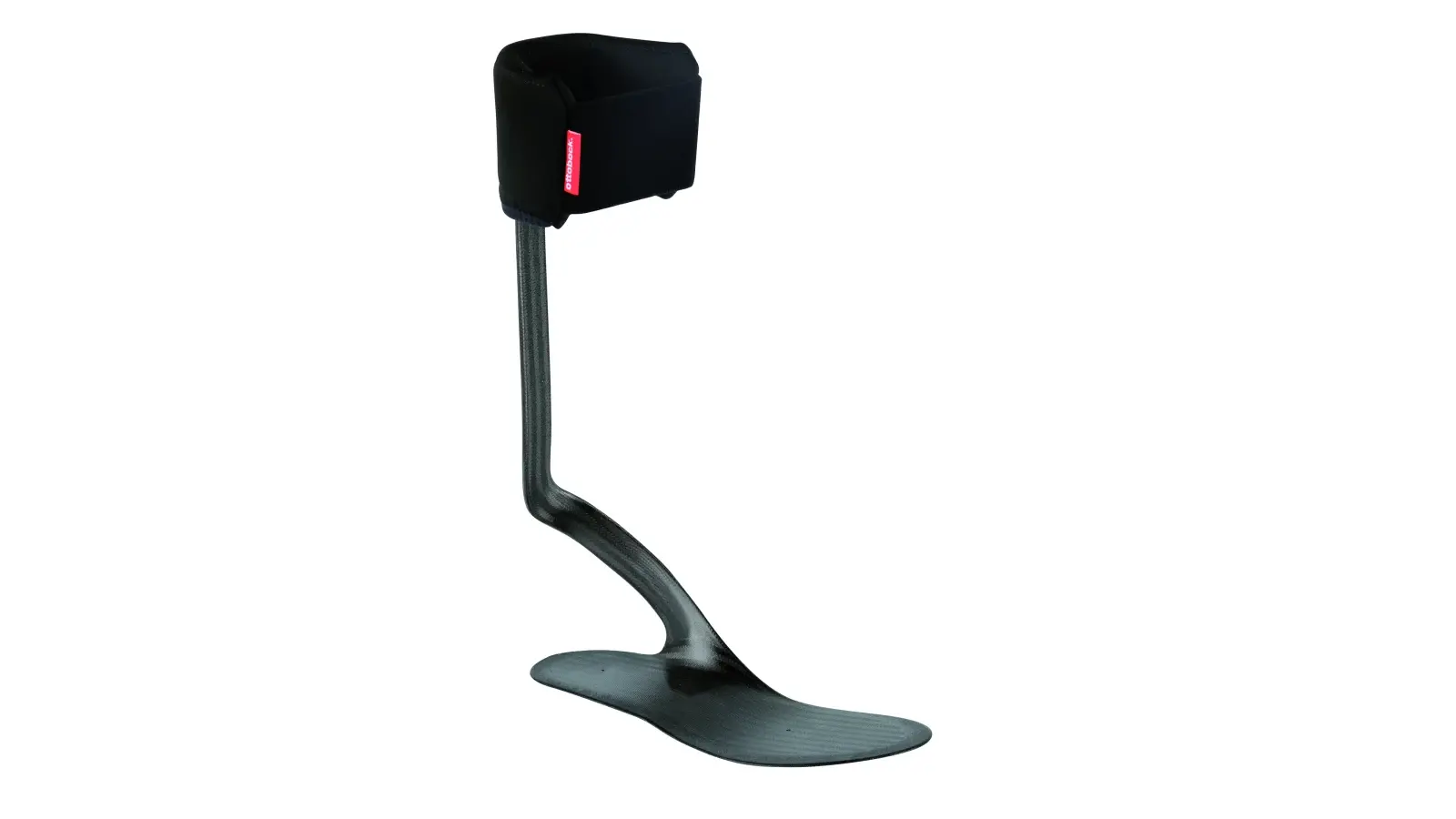
A ready-made foot-drop brace comes in standard sizes or an adjustable design. A custom ankle-foot orthosis is made for your limb and prescribed support needs. The useful choice depends on what needs controlling, how the brace fits and how you move. A product’s material or price alone cannot settle that decision.
First, Understand the Cause of Foot Drop
Foot drop means difficulty lifting the front of the foot. It can make it harder to clear the toes during a step. It is a sign that can have different causes, including nerve or muscle problems, rather than a diagnosis of one condition.
If the difficulty is new or has not been assessed, see a doctor. A brace may support movement, but buying one does not investigate the cause. Your medical and rehabilitation teams can advise on the care you need.
Tell the orthotist what happens when you walk: toe catching, an ankle that turns, changes with fatigue or a knee that feels unstable. These details help identify the movement that needs assessing.
An AFO is worn around the ankle and foot. A foot orthotic placed inside a shoe serves a different purpose and should not be assumed to control foot drop. This guide concerns foot-drop supports and AFOs.
What Ready-Made and Custom Mean
Ready-made, prefabricated and off-the-shelf describe braces manufactured before your individual fitting. They may come in a range of sizes or allow specified adjustments. The product’s instructions define who it is intended for and how it should be fitted.
Custom describes an orthosis made to individual measurements or limb shape, commonly captured with a cast or scan. Its design is selected for the required support and movement control. Being custom does not mean every possible feature is appropriate.
| Approach | Key question |
|---|---|
| Ready-made brace | Does the available size and design provide the required support without unwanted pressure or movement? |
| Custom AFO | Does an individual shape or prescribed movement control address needs that available ready-made options do not meet? |
Carbon fibre and plastic are materials, rather than definitions of ready-made or custom. The AFO types guide explains those materials and designs. Here, the focus is the fitting and prescription decision.
A Toe-Lifting Support May Not Address Every Need
A product sold as a foot-drop splint may be intended mainly to help lift the foot. Another AFO may be designed to control ankle position or movement more extensively. Similar product names do not show that they provide the same support.
An orthotist assesses the ankle, foot and the effect on the knee during standing and walking. A brace that clears the toes may still need checking for stability, pressure and its effect elsewhere in the leg.
Where direct knee support is needed, a KAFO may be considered. It extends to the thigh and adds knee control. That is a different assessment from choosing a simple foot-drop aid; read the KAFO guide for the distinction.
A brace does not cure the underlying cause of foot drop. Its effects vary with the condition, design, fit and training. Physiotherapy, medical treatment or another aid may still be part of your plan.
What an Orthotic Assessment Checks
- Foot and ankle position, range of movement and muscle control.
- Sensation, skin condition and areas that need protection.
- Standing, walking and the effect of the proposed support on the knee.
- Footwear, the space available for the brace and the shoe’s heel height.
- Whether you can put it on, fasten it and use it consistently.
- Your home, work, school or activity goals and existing aids.
For a ready-made brace, ask whether it fits within the manufacturer’s selection limits and whether a trial is available. Standard sizing can be suitable for some needs, but a size chart cannot show every aspect of your walking or skin.
For a custom AFO, ask why the individual shape or control is needed and what the design is intended to do. The assessment should explain the reason, rather than relying on the word custom as proof of a better outcome.
Bring your current support if you use one, even if you rarely wear it. Explain why it is difficult: discomfort, shoe fit, fastening, weight or a task it does not support. Those details are useful when comparing options.
Fit the Brace with Suitable Shoes
The brace must be checked with the footwear you plan to use. Its footplate and ankle sections occupy space. Shoes need the right depth, width, opening and fastening to hold the foot and brace in position.
A shoe that can be forced over the brace is not necessarily a useful fit. Check heel position, pressure across the instep and how the combination works when you move. Going up in length alone may not provide the space required.
Align can provide Drew, Dr. Comfort and BILLY Footwear. Our AFO shoe guide explains the features to compare and what to bring to a fitting. Specific models and sizes are confirmed for the brace.
Do not cut or reshape a brace to get it into a shoe. Discuss a different shoe, a fit adjustment or another orthotic option with the clinician. A problem with access or fastening should be addressed as part of the fitting, not left for you to solve at home.
Training, Skin Checks and Reviews
Ask for instructions on putting the brace on and taking it off, its wear schedule and the activities for which it is intended. Different devices have different fitting and use instructions. Follow the plan for yours.
Check the skin as taught. Pain, blisters, broken skin or marks that do not settle need advice from the orthotist. This is especially important if you have reduced sensation and may not feel pressure clearly.
Report a crack, worn strap, loose part or a change in how the brace supports you. Do not heat, bend or repair it yourself. A change in symptoms, walking or limb shape may need reassessment, even if the brace has not broken.
Agree how to review the result against your original goals. For example, can the brace be used with your work footwear, and does it support the route you need to walk? A review should consider practical use as well as the device’s condition.
Cost and Questions Before Choosing
Compare the complete service, rather than the retail device price alone. Ask whether the quote includes assessment, fitting, adjustments, training, reviews and consumable parts. Confirm any trial or return terms.
If you have funding, establish which evidence and approval are required for the proposed support. The NDIS considers assessed need and funding criteria; neither ready-made nor custom automatically establishes entitlement.
- Which movement or support need does this design address?
- Why is this option being considered rather than the alternative?
- Can I trial it with my usual shoes and walking aids?
- What limits or problems remain, and what else needs care?
- Who will adjust or review it if my fit or walking changes?
Align’s AFO service covers custom AFO assessment and fitting. See the first appointment guide for preparation and the funding page for a discussion of payment options.
Frequently Asked Questions
Is a custom AFO always better than a ready-made brace?
No. The appropriate option depends on the support needed, limb shape, fit, skin, movement and footwear. Assessment explains whether an available ready-made design can meet the need or an individual design is required.
Can a foot-drop brace cure foot drop?
A brace may support movement or foot position, but it does not cure every cause of foot drop. Medical assessment establishes the cause and helps guide the wider care plan.
Does carbon fibre mean a brace is custom-made?
No. Carbon fibre is a material. Ready-made and custom orthoses can use different materials. The construction, prescribed control and fit matter more than the material label alone.
Related Guides and Services
Sources
Clinical guidance and manufacturer information checked on 10 October 2026. Your own fitting plan and the instructions for your device take priority.
About the author
Maegan Morrison
Maegan is an AOPA Certified prosthetist and orthotist on the Sunshine Coast. She runs Align Prosthetics and sees every client herself, at home or at the Birtinya clinic.
About MaeganDiscuss Your Foot-Drop Support
Tell Maegan what happens when you walk and what you need the brace to do. An assessment can help establish suitable AFO options.
Open 7 days, 9am to 7pm. Home visits across the Sunshine Coast or our Birtinya clinic.