Prosthetics
Your First Below-Knee Prosthetic Fitting: What Happens and What to Bring
By Maegan Morrison, AOPA Certified prosthetist and orthotistUpdated
Your first below-knee prosthetic fitting is a series of checks: how the socket fits your limb, how the leg stays attached, and how it supports you when you stand and move. The aim is to build a prosthesis around your needs, then teach you how to use it. Here is what to expect and what to bring.
Assessment Comes Before Fitting
A below-knee prosthesis replaces the missing part of the leg below the knee. You keep your own knee joint. The socket is the shaped part that holds your residual limb, meaning the part of your leg that remains after amputation.
Before a first fitting, your rehabilitation team considers wound healing, skin condition, swelling, strength and movement. Being ready for a prosthesis is an individual decision. An assessment can still be useful while you are preparing; it does not mean a finished leg will be supplied at that visit.
Start with the activities that matter to you. Getting from the bedroom to the bathroom is a different goal from walking on sand or returning to a standing job. Bring examples of what you want to do and what currently makes it difficult.
- Discuss your health, amputation history, current pain and any wound care.
- Explain the distances, surfaces and stairs you encounter at home and work.
- Show the walking aids you use and describe the help you need.
- Ask how prosthetic fitting will work alongside physiotherapy and other rehabilitation.
Capturing Your Limb Shape and Choosing the Parts
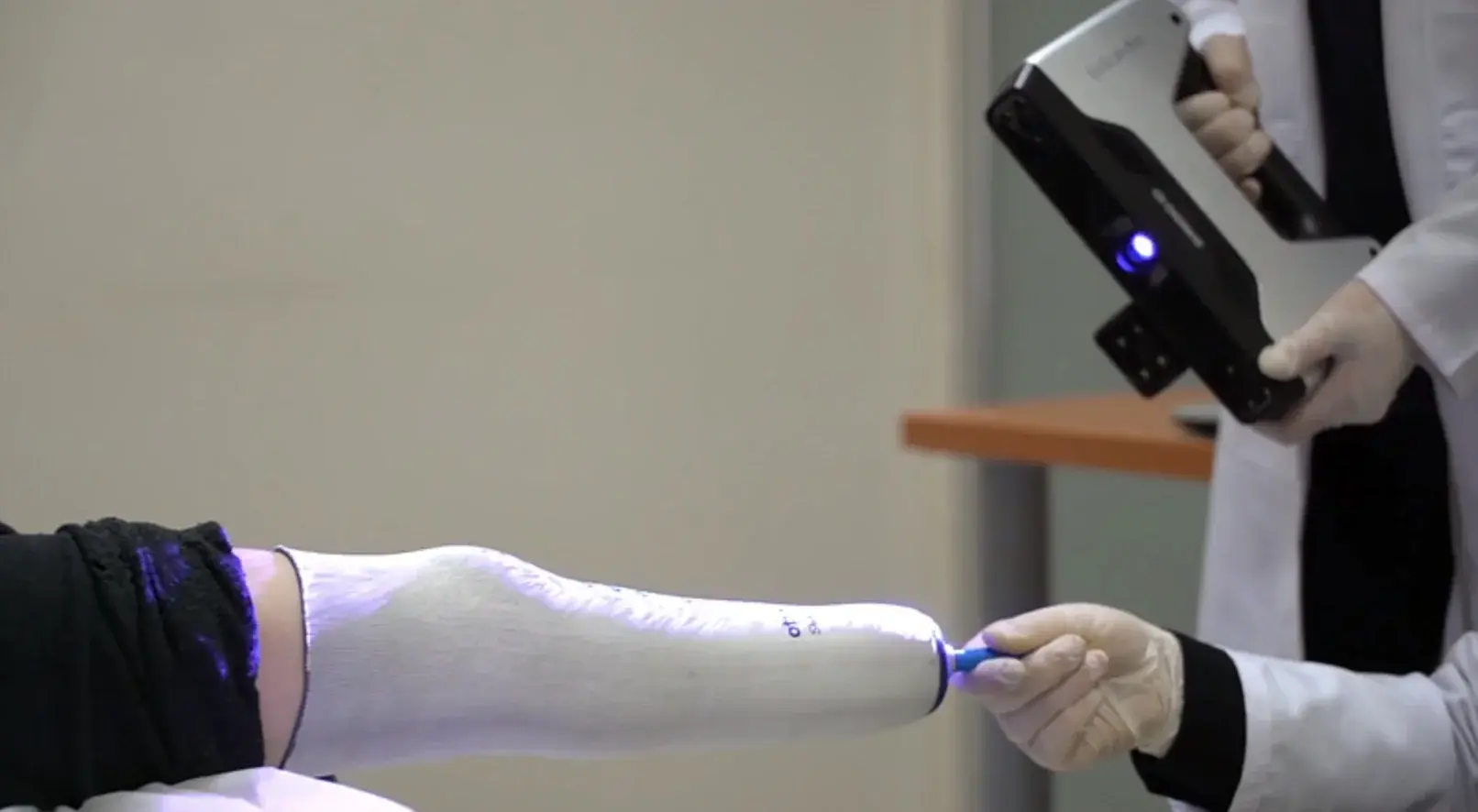
The prosthetist takes measurements and captures your limb shape with a cast or scan. This information helps them make the socket. They also discuss the liner, the suspension system that keeps the limb attached, and a suitable prosthetic foot.
Those parts must work together. The liner sits between your skin and the socket in many designs. Suspension may use a locking pin, suction or another system. A choice that suits one person may be hard for another person to put on or remove.
Ask to see how the proposed system is used. Can you manage the fastening while seated? Can you reach it easily? Will someone help you? These practical details belong in the fitting decision, alongside your limb shape and walking needs.
Our prosthetic liner guide explains the main interfaces. The prosthetic foot guide covers questions to ask about the foot.
What a Check Socket Is For
A check socket is a trial socket used before the final socket is completed. It lets the prosthetist assess contact, support and pressure. Some are clear, which helps show where the limb meets the socket. Adjustments or further trial fittings may be needed.
Tell the prosthetist where you feel pressure, pulling or rubbing. Try to describe the place and the task that brings it on: sitting with the knee bent, standing, or stepping forward. You do not need to know the clinical name for the problem.
A fitting is a working appointment. A change made during it is part of checking the design, rather than a test you must pass. Ask what has changed and what you should notice when you try the socket again.
Standing, Alignment and Walking Checks
Alignment means the position of the socket, connecting parts and foot relative to one another. The prosthetist checks the height and setup, then watches you stand and walk when it is safe to do so. Support or walking aids may be used.
The shoe is part of this setup. Bring the shoes you expect to wear. A major change in heel height can change how a prosthetic leg stands, so discuss footwear before using a different style.
You may practise putting the leg on and taking it off, sitting, standing and short walks. The amount you do depends on your readiness and the fitting stage. Walking training continues beyond the fitting appointment; an adjusted leg and a rehabilitation programme serve different purposes.
Ask who will help with walking practice and what you should do between appointments. Your progress, wear schedule and need for support are individual. There is no fixed number of visits or date by which everyone should walk unaided.
What to Bring to Your Appointment
- Shorts or loose clothing that allows access to your limb and knee.
- Your usual shoes, and a second pair if you use a different style for work.
- Your current prosthesis, liners and prosthetic socks, if you already have them.
- Your walking aids and any relevant referral, discharge or medical reports.
- Funding details such as your NDIS plan, claim number or other approval information.
- A short list of goals, questions and any symptoms you want to discuss.
A family member, carer or support worker can help you remember information and discuss how the prosthesis will be used at home. Tell the clinic if you need help with access, transfers or communication.
If you are unsure what applies to your visit, ask before you travel. Align’s first appointment page explains its assessment, quote, fitting and review process.
Before You Take the Prosthesis Home
Ask for a clear plan rather than guessing how long to wear the leg. You need to know how to put it on correctly, what to check on your skin, how to care for the parts, and how to contact the team if something changes.
- What wear and walking practice is appropriate for me now?
- How do I check that the suspension is secure?
- Which skin changes mean I should remove the prosthesis and call?
- When is the next review, and who helps with rehabilitation?
- Which appointments, components and consumables are included in the quote?
If a socket becomes painful, starts rubbing or feels loose, arrange a review rather than waiting for a scheduled visit. Our socket fit guide explains what that review may cover. For the financial steps, read the Australian prosthetic costs and funding guide.
Frequently Asked Questions
Will I take my first prosthetic leg home at the first appointment?
Not necessarily. Assessment, making the socket, trial fitting, alignment and walking training may happen across several visits. Your team will explain when the leg is ready and when you can use it safely at home.
How long does a first below-knee fitting take?
There is no single timeframe. Healing, changes in limb size, fitting adjustments, rehabilitation and funding approval can affect the process. Ask for a plan for your own stage of recovery.
Should I bring shoes to a prosthetic fitting?
Yes. Bring the shoes you plan to wear with the prosthesis. The prosthetist checks the leg with suitable footwear because heel height and shoe shape affect its setup.
Related Guides and Services
Sources
Clinical guidance and manufacturer information checked on 10 October 2026. Your own fitting plan and the instructions for your device take priority.
About the author
Maegan Morrison
Maegan is an AOPA Certified prosthetist and orthotist on the Sunshine Coast. She runs Align Prosthetics and sees every client herself, at home or at the Birtinya clinic.
About MaeganPrepare for Your First Prosthetic Fitting
Speak with Maegan about your goals, your stage of recovery and the next step in fitting a below-knee prosthesis.
Open 7 days, 9am to 7pm. Home visits across the Sunshine Coast or our Birtinya clinic.