Prosthetics
When Your Prosthetic Socket No Longer Fits: What a Review Checks

By Maegan Morrison, AOPA Certified prosthetist and orthotistUpdated
A socket that once felt secure can become loose, tight or uncomfortable. Changes in your limb, your liner or the way the prosthesis works can all affect fit. A review helps identify the cause and decide whether an adjustment, a new part or a different socket is needed.
Signs Your Socket Needs a Review
The socket is the part of the prosthesis that holds your residual limb. Its shape and fit matter whether you use a below-knee leg, an above-knee leg or an upper-limb prosthesis. A change in comfort or control deserves attention.
- The limb moves up and down inside the socket more than it used to.
- You struggle to get fully into the socket or to secure the suspension.
- You notice rubbing, a blister, a sore or a new area of tenderness.
- Your usual sock arrangement no longer gives the fit you were taught.
- You feel less steady, or a familiar activity becomes harder.
- The liner, sleeve or another part looks damaged or behaves differently.
These signs do not diagnose the problem. A loose feeling may come from limb volume, suspension or wear in an interface. A tight feeling may relate to swelling or another change that needs medical assessment. Describe what you notice rather than trying to choose the repair yourself.
Why Fit Can Change
The size and shape of a residual limb can change after amputation and over time. Body weight, swelling and activity may also affect how it sits in the socket. The same socket can feel different across the day.
Your prosthetist considers those changes alongside the condition of the device. A worn liner, a damaged suspension sleeve or a problem with a locking system may affect how securely the prosthesis is held. A change in footwear or alignment can also alter how a leg prosthesis feels in use.
Bring up changes outside the prosthesis too. A new medical condition, wound, medication or change in activity may be relevant. Do not change prescribed medicines or compression routines to make the socket fit; ask the treating team for advice.
Our liner and suspension guide explains how the interface and suspension work. The prosthetic sock guide explains why a changing sock requirement can be useful information for a review.
Pain and Skin Changes Need Attention
Inspect the skin of your residual limb regularly, including areas that are hard to see. A mirror or help from someone you trust can make this easier. Notice new marks, blisters, broken skin or a sore that is not settling.
If wearing the prosthesis causes pain or you develop broken skin, remove it and contact your prosthetist or treating clinician for advice. Use the mobility support you have been taught to use while the fit is assessed. A wound may need medical care as well as a socket review.
Seek prompt medical advice for signs of infection such as increasing warmth, redness, swelling or discharge, or if you feel unwell. Pain can have causes beyond socket pressure, including nerve pain. Changing the socket is not a substitute for investigating a medical problem.
What the Prosthetist Checks
A review usually starts with your account of the problem: when it began, where you feel it, and whether it changes with time or a particular task. You can point to the area and demonstrate the movement that troubles you when it is safe.
| Area | What is being checked |
|---|---|
| Your limb and skin | Shape, size changes, sensitive areas and whether a medical or wound review is needed. |
| Socket contact | How your limb sits in the socket and where support or pressure occurs. |
| Liner and socks | Their condition, compatibility and the arrangement you were prescribed. |
| Suspension | Whether the system is secure and whether worn parts affect attachment. |
| Movement and alignment | How the prosthesis works during relevant standing, walking or arm tasks. |
The result should be an explanation of the likely cause and the proposed next step. Ask whether the change can be addressed in the existing socket, whether another part needs replacing, or whether the socket itself needs to be remade.
How to Prepare for the Review
- Bring the prosthesis, your liner, sleeve and the socks you normally use.
- Bring your usual shoes for a leg prosthesis and any walking aids.
- Note when the problem occurs: morning, later in the day, sitting or walking.
- Explain changes in body weight, swelling, activity or health.
- Bring previous fitting information, reports and funding details if available.
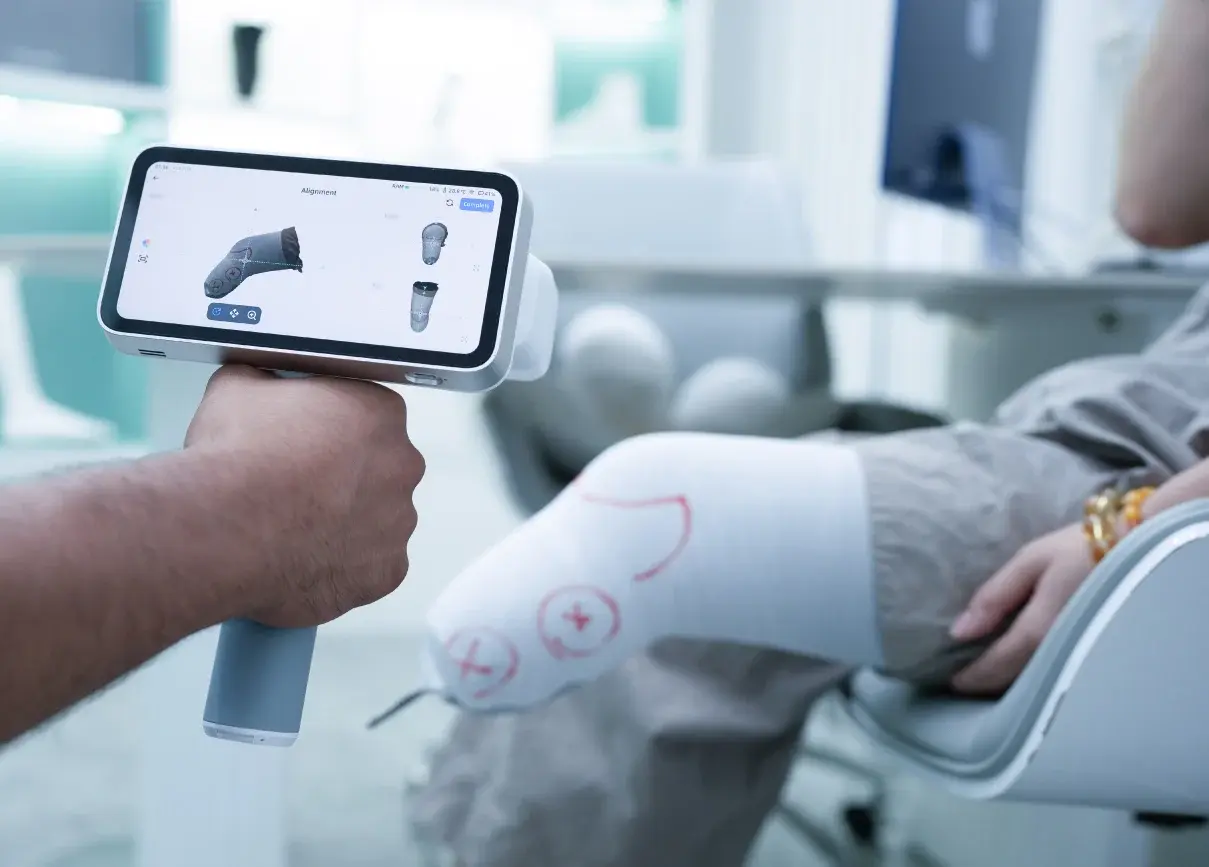
- If a mark has faded before the appointment, a dated photo may help explain it.
You do not need a perfect diary. A few concrete examples are enough to start a useful discussion. For example: the socket feels secure at breakfast but begins to move during an afternoon walk; or you can wear it while standing but feel pressure when sitting.
Tell the team before travelling if the prosthesis is unsafe to use or you cannot manage without it. They can discuss how to approach the appointment and what support you may need. Do not keep wearing an unsafe device simply to arrive wearing it.
Adjustment, Replacement or Another Type of Care?
A review does not automatically mean you need a complete new prosthesis. Depending on the findings, the next step may be adjustment, a replacement liner or suspension part, a new socket, rehabilitation input or medical care.
A socket change can sometimes use suitable existing components. Whether those parts can be retained depends on their condition, compatibility and your needs. The assessment and quote should make that distinction clear.
Ask what work is proposed, why it is needed and how funding approval will be confirmed. You can discuss a second opinion if you want another view of your options. Align’s prosthetic repairs and review service explains its local service, including review of prostheses made by other providers.
After an adjustment or a new socket, agree how to judge the result and when to follow up. Report a recurring problem even if a recent review seemed to resolve it. Your experience in everyday use is part of the assessment.
Frequently Asked Questions
Does a loose socket mean I need a new prosthetic leg?
No. A review may identify a fit, liner or suspension issue that can be addressed without replacing the whole leg. Sometimes a new socket is needed. The condition of the other components is assessed separately.
Should I keep wearing my prosthesis if it causes a blister?
Remove the prosthesis and contact your prosthetist or treating clinician for advice. Broken skin needs attention. Use your agreed mobility support while the wound and socket fit are assessed.
Can I fix socket discomfort by adding more socks?
Only use sock adjustments you have been taught for your particular socket and suspension system. Repeated changes, pain or a fit that remains poor need a review. More socks do not solve every fit problem.
Related Guides and Services
Sources
Clinical guidance and manufacturer information checked on 10 October 2026. Your own fitting plan and the instructions for your device take priority.
About the author
Maegan Morrison
Maegan is an AOPA Certified prosthetist and orthotist on the Sunshine Coast. She runs Align Prosthetics and sees every client herself, at home or at the Birtinya clinic.
About MaeganBook a Socket Fit Review
Tell Maegan what has changed in your fit, skin or day-to-day use. She can assess the prosthesis and explain the next steps.
Open 7 days, 9am to 7pm. Home visits across the Sunshine Coast or our Birtinya clinic.